Thinking about treating yourself to a hot tub? Good decision. But then comes the big question: which of the possible hot tub materials suits you, your garden – and your wild life?
They are available in wood, with GRP inserts, in stainless steel or made entirely of plastic. And each material has its own character, advantages and disadvantages.
1. the classic wooden hot tub: for purists

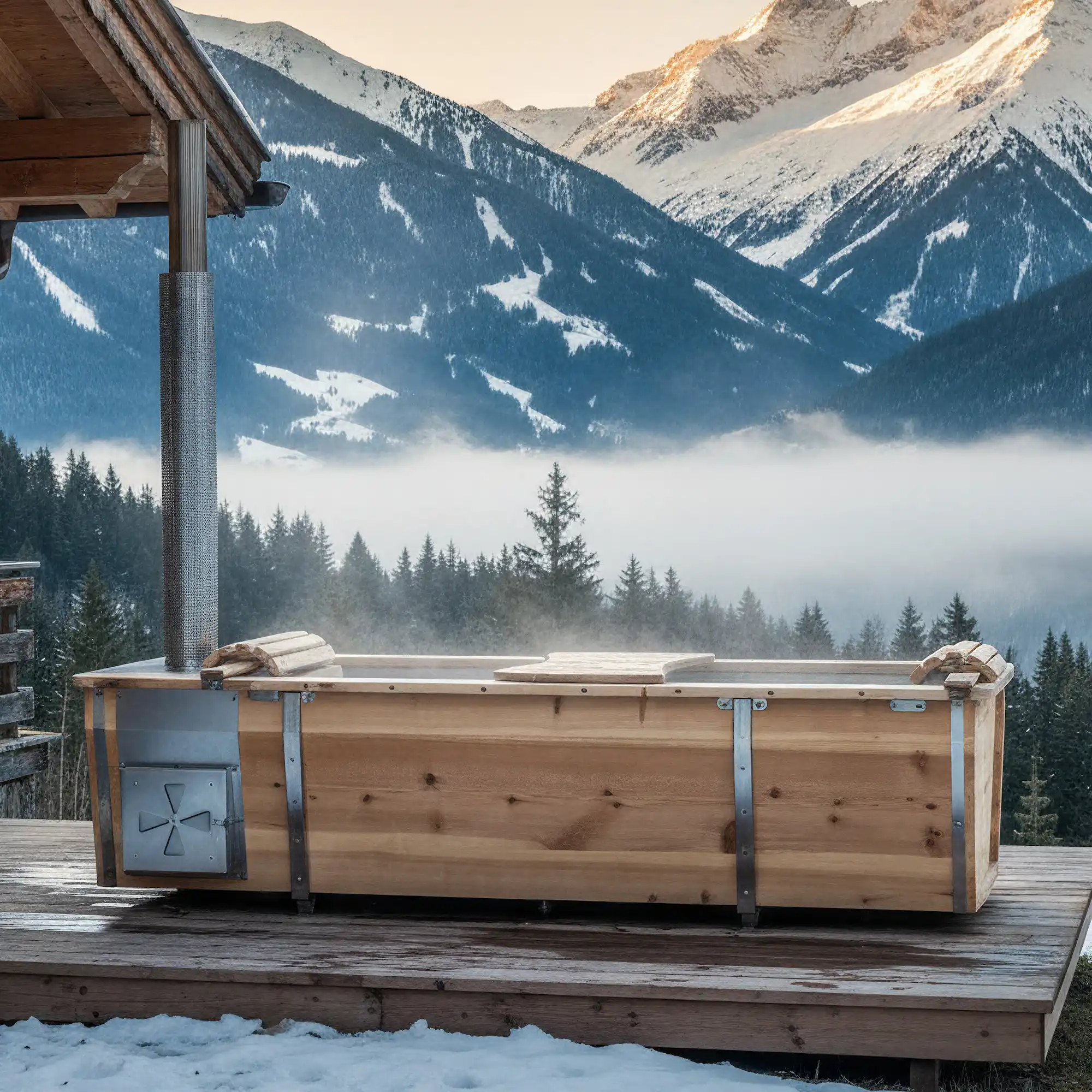
A wooden hot tub looks original. You can smell the wood, see the grain and feel nature. However,
wood for the entire hot tub also means increased care, patience and compromises, as the wood needs permanent moisture to prevent it from drying out.
Advantages:
- 100% natural – real wood feel
- rustic, archaic look
Disadvantages:
- Very high-maintenance – regular cleaning, oiling and maintenance
- swells and shrinks when the weather changes – the wood is constantly working
- must be constantly filled with water – otherwise it will dry out and leak
- Standing water is often perceived as unhygienic – especially in summer
- Dirt can get stuck in the cracks – cleaning is time-consuming
This is why most hot tub manufacturers combine the wooden tub with an inner tub made of another, impermeable material, such as plastic, GRP, stainless steel or aluminum.
2. GRP hot tub: practical & easy to clean

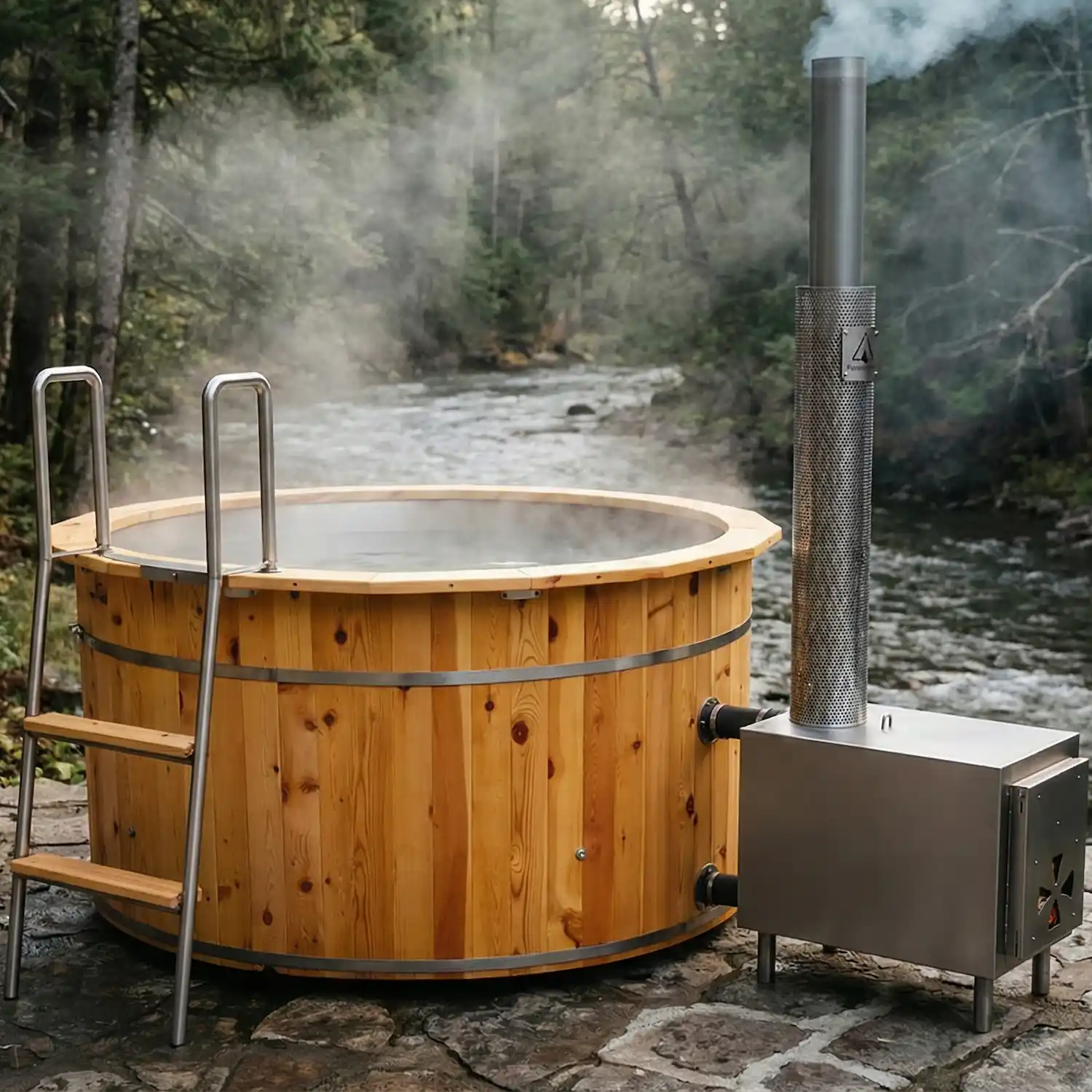
There are hot tubs whose inner tub is made of GRP (glass fiber reinforced plastic). This means that the barrel has a smooth plastic insert, which is more stable and durable than a pure plastic barrel due to the built-in glass fiber structure, and this is covered with wood on the outside to create a more attractive appearance.
Low maintenance, high comfort. But also: plastic remains plastic.
Advantages:
- splinter-free & smooth – comfortable to sit on
- Easy to clean & more durable than pure wood
Disadvantages:
- No pure natural feeling – artificial touch
- Plastic odors and chemicals in the water
- Plastic is not recyclable – not a sustainable material
- often looks faded after a short time
GRP is a compromise – convenient, but a far cry from the uncompromising quality, appearance and durability of a stainless steel drum.
3. stainless steel hot tub: uncompromising, hygienic & timeless

Now it’s getting serious. Stainless steel is the power material for anyone who wants to live a life without plastic – and still not compromise on comfort, style and freedom.
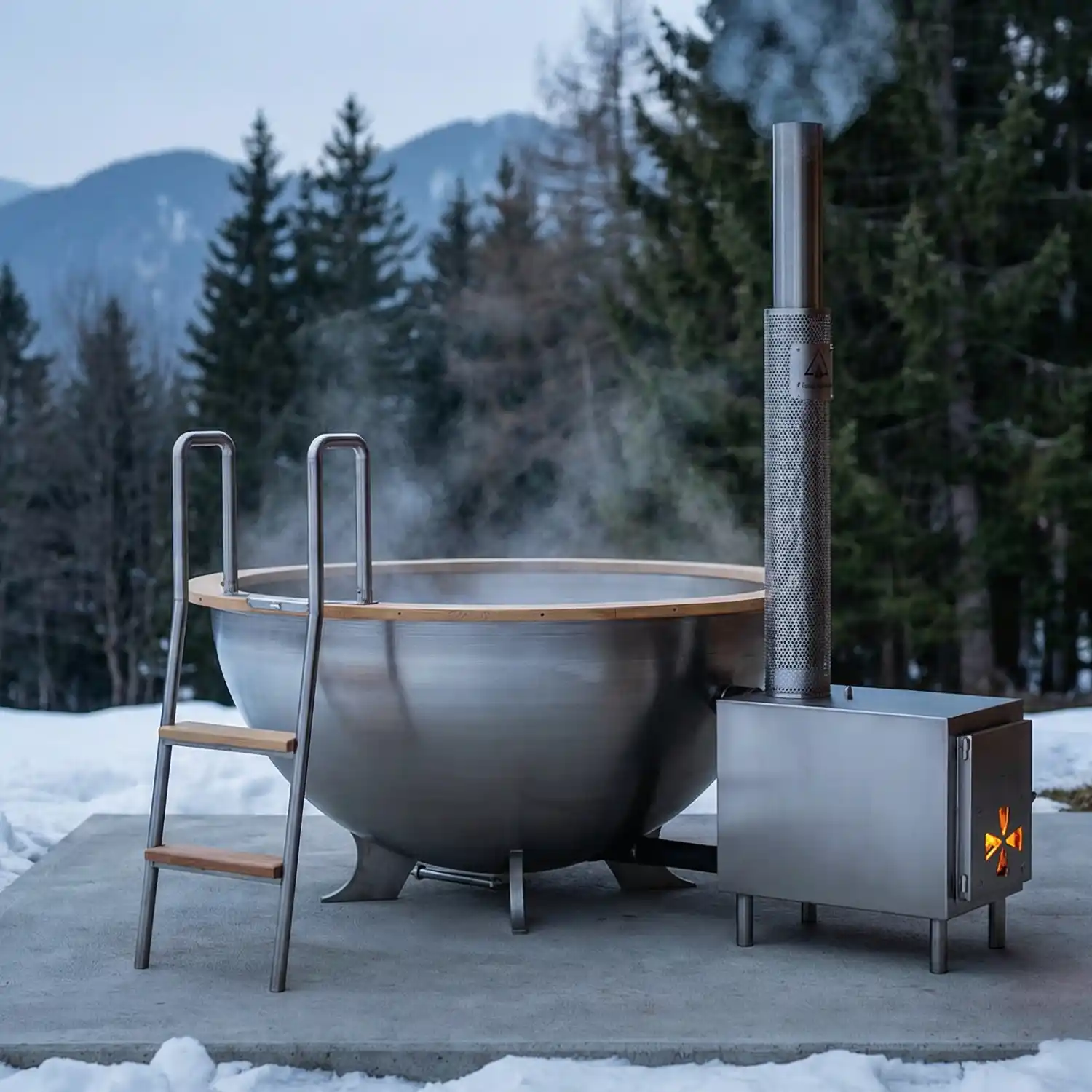
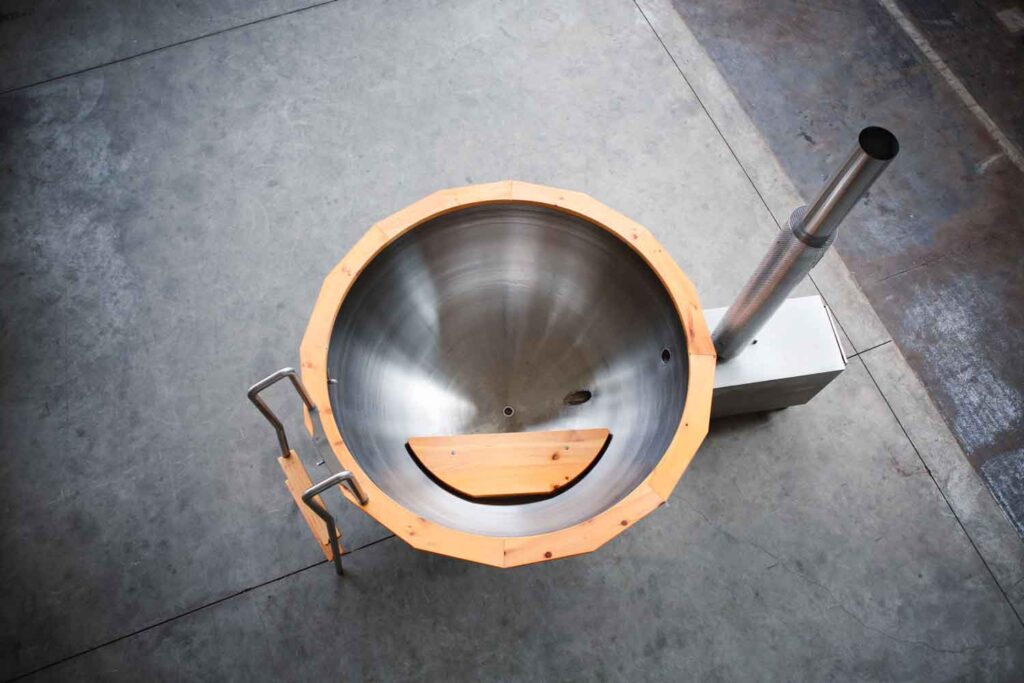
Feuerwasser deliberately uses stainless steel. For all indoor tubs our hot tubs and garden tubs V4A stainless steel is used, which is clad with solid pine wood. The cup of firewater is a hot tub for 2 people with a modern design, mainly made of V4A stainless steel and rounded off with a simple frame made of solid pine wood.
Advantages:
- 100 % leak-proof – no swelling, no warping, no leaks
- Low maintenance – easy to clean, no care products required
- Hygienic – smooth, germ-free surface
- Robust & durable – lasts for decades
- sustainable – 100 % recyclable & environmentally friendly
- Pleasant to the touch – no plastic feel, no splinters
- Elegant look – shiny, modern, stylish in any environment
- combined with real wood on the outside – for a natural look
Disadvantages:
- slightly more expensive to purchase – but you only pay once
The combination of stainless steel and solid pine wood creates a product that lasts a lifetime, is beautiful and sustainable.
4. plastic hot tub: inexpensive

Plastic bath tubs do what they are supposed to do. Put water in, bathe, done. But they don’t do anything to you.
And honestly: do you really want to sit in an oversized plastic tub?
Advantages:
- Inexpensive to purchase
- No major maintenance required
Disadvantages:
- Plastic – looks cheap, feels cheap
- no atmosphere, no feeling of nature
- Sensitive to UV light – fades quickly and becomes brittle
- not sustainable – hardly recyclable, harmful to the environment
- strong plastic odors
- releases chemicals into the bath water
Conclusion: The best combination of hot tub materials
Very clear:
Inside: Stainless steel
Exterior: Solid pine
Because only this combination brings together what otherwise seems incompatible:
Strength & comfort.
Beauty & function.
Wildness & hygiene.
If you:
- don’t feel like constant care,
- pay attention to sustainability,
- don’t want to use plastic and
- want something that will last for decades,
then stainless steel is your material for the inner tub of your hot tub.
Own the wild.


About the author
Sophie Auer is the wife of Martin Auer, the founder of Feuerwasser. She has been with Feuerwasser since the early days. She loves the simple life in nature, bathing in the open air and the crackling of a real wood fire.
In her texts, she writes about natural self-care, real experiences without filters and the good life – away from the screen. As the provocative voice of the Own The Wild mission, she inspires people to get back in touch with themselves, with nature and with their own wildness.