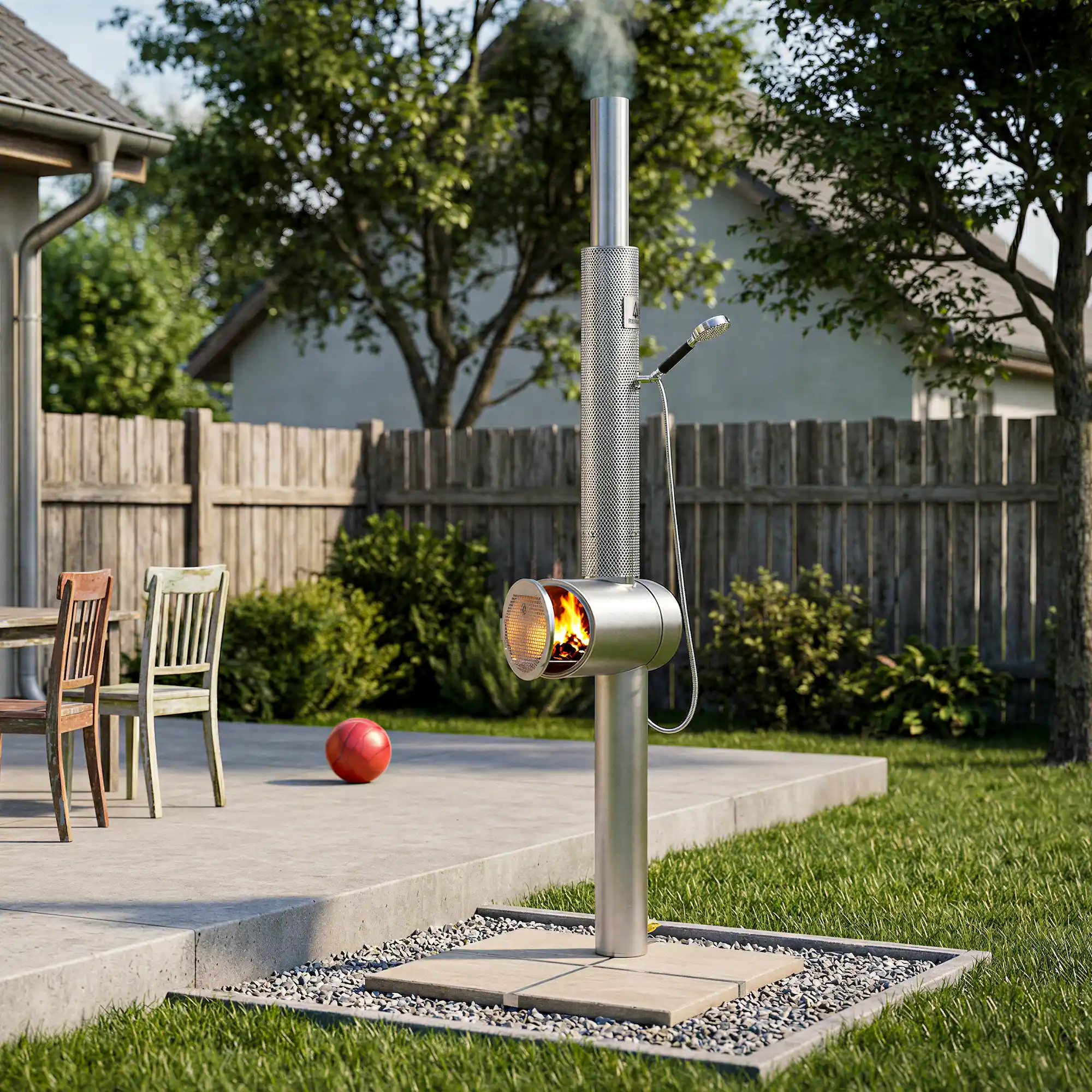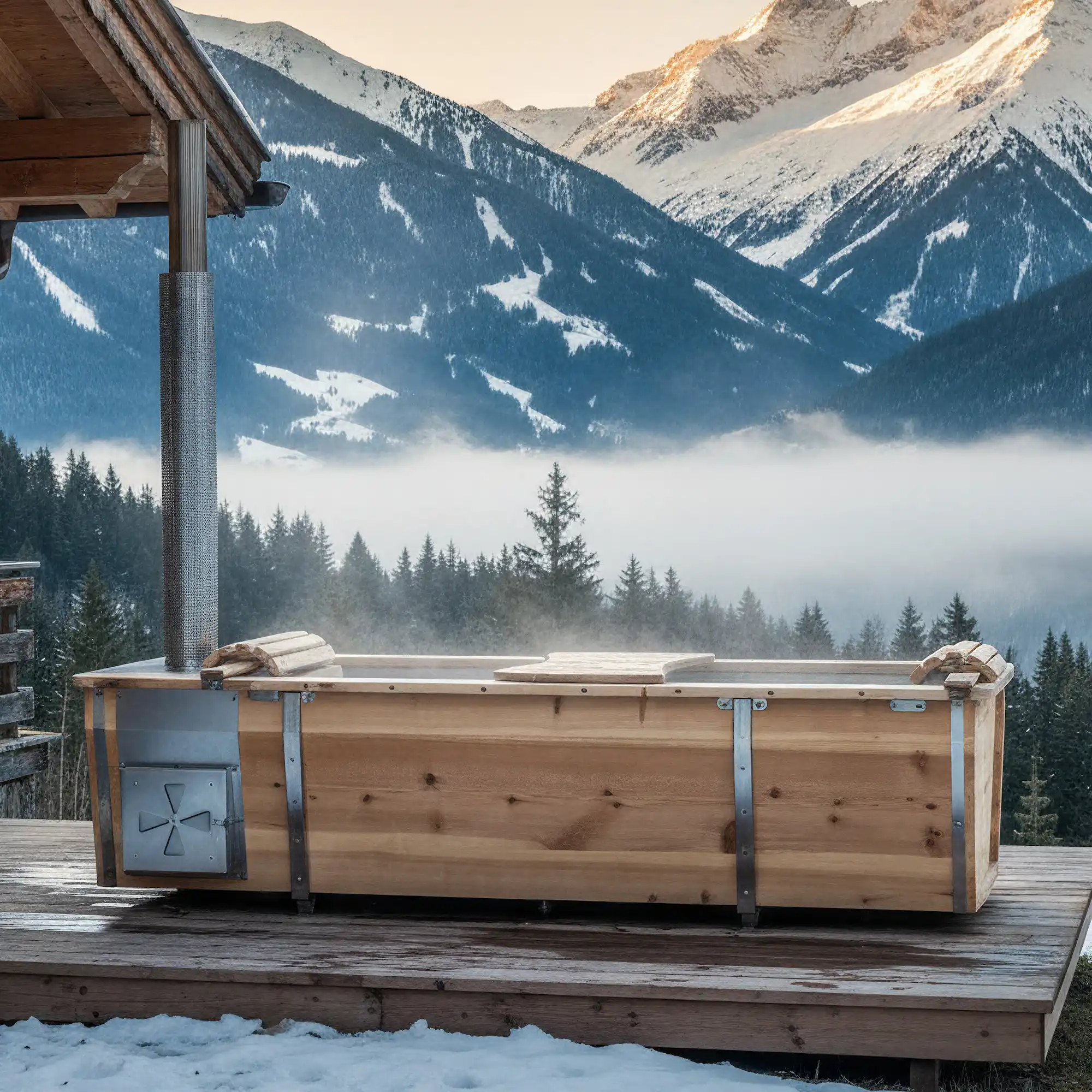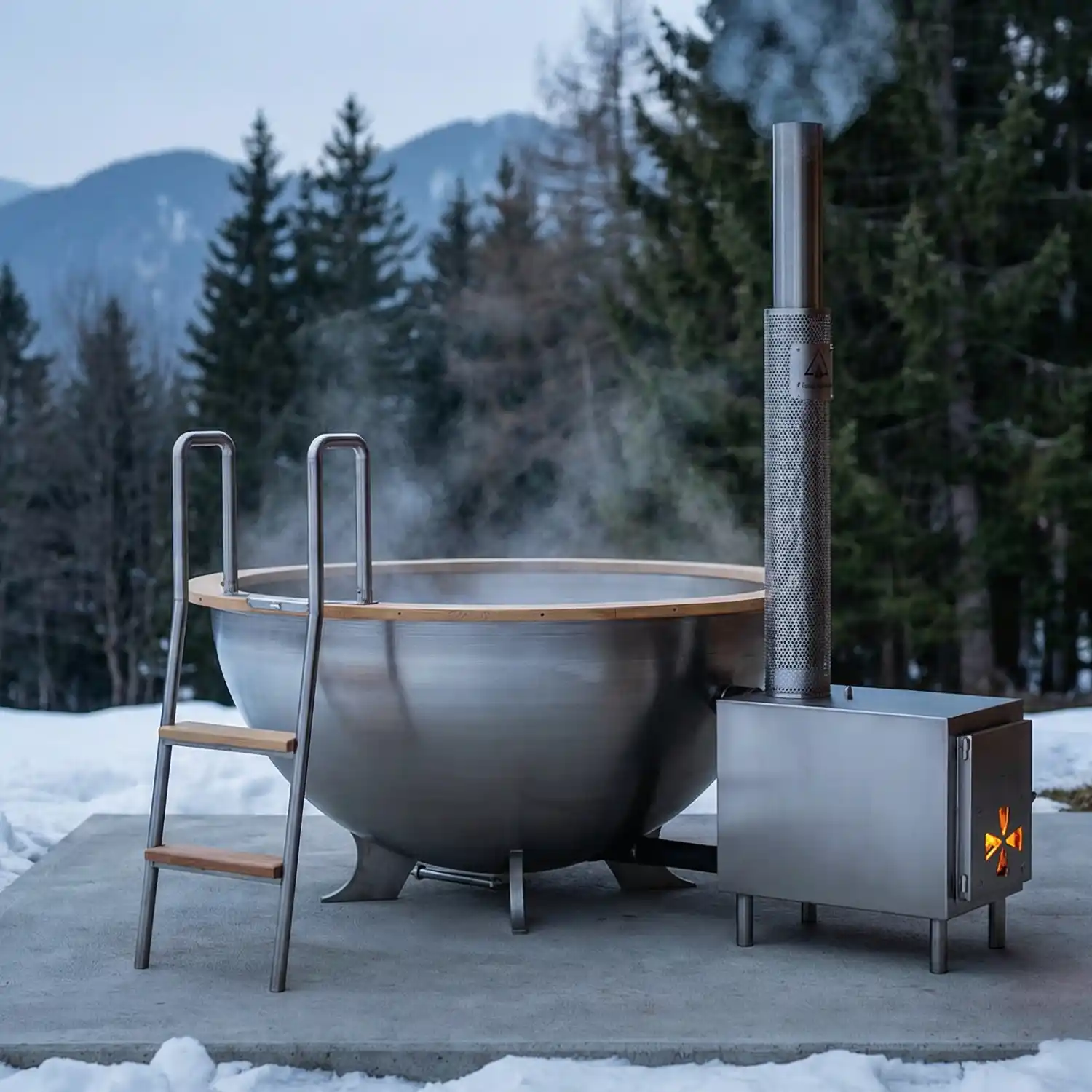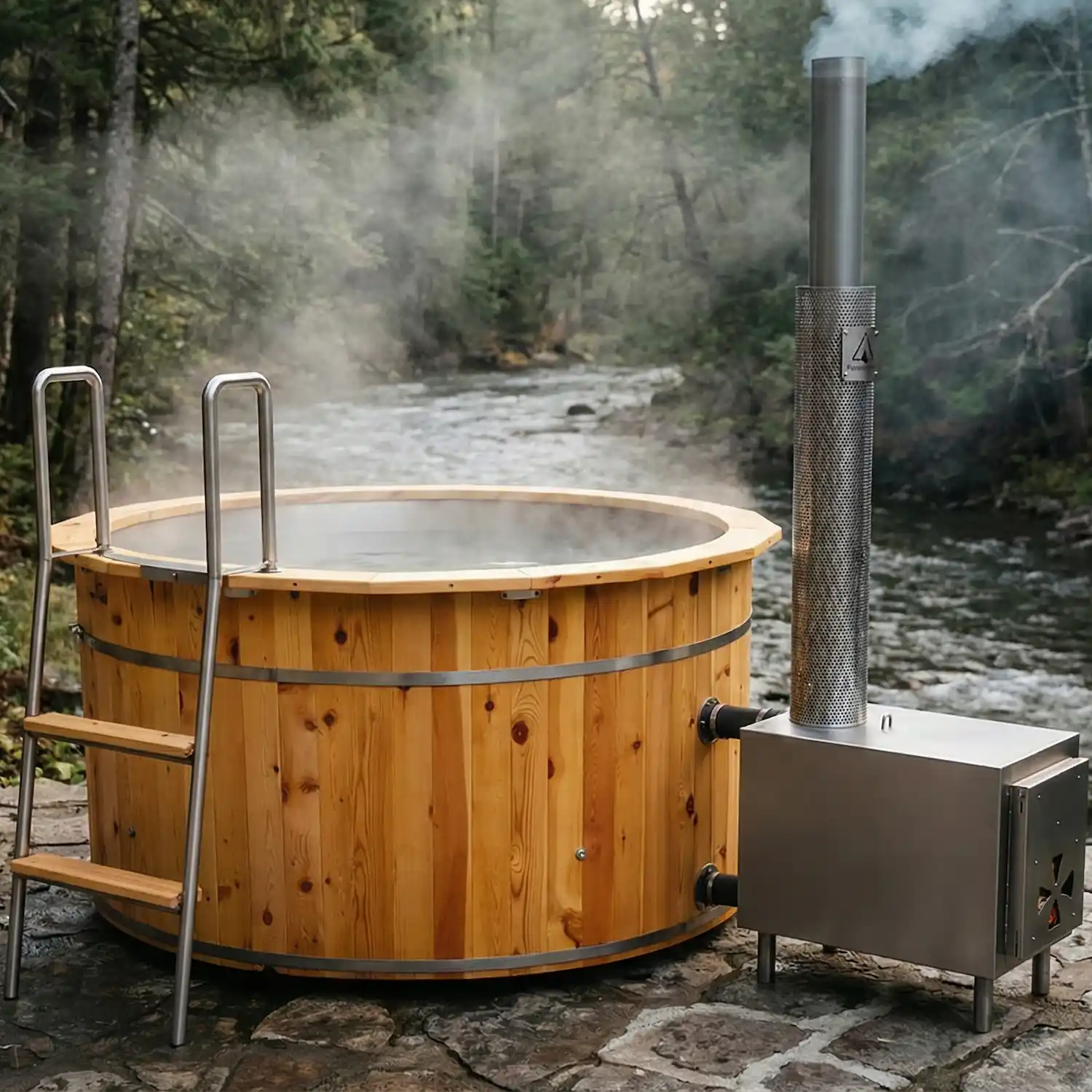
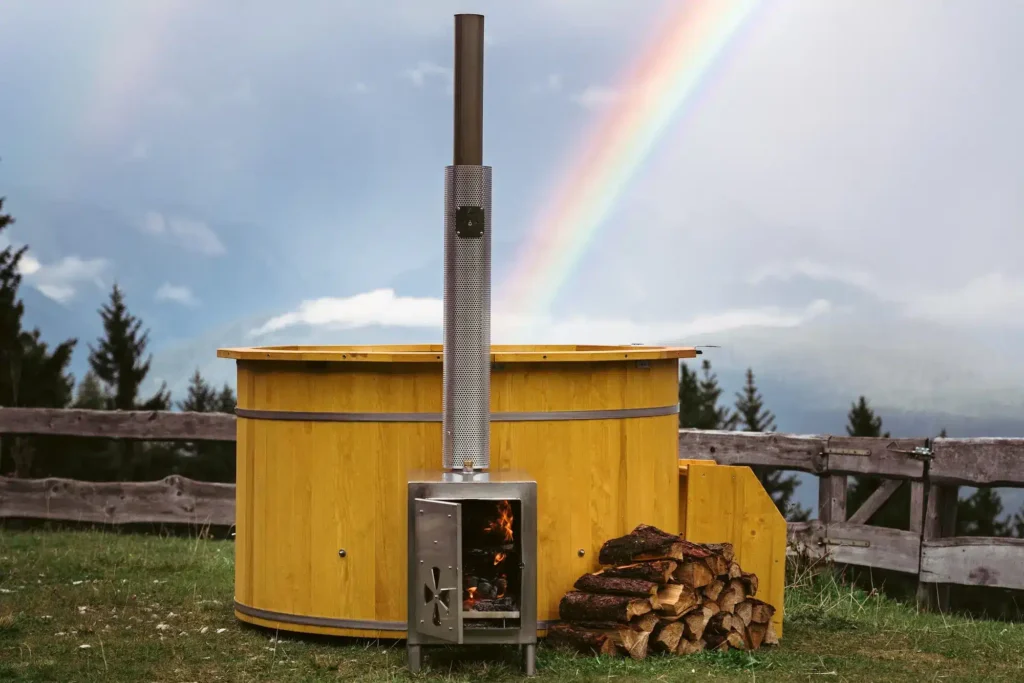
A hot tub or garden bathtub in your own garden? Sounds like luxury, but is often more down-to-earth and sustainable than many people think.
So that you don’t just dream of fire and water, but can plan realistically, I’ll show you here what hot tub costs you’ll really have to pay – from the purchase to the ongoing operation of your hot tub or garden bathtub.
1. purchase costs: How much does a hot tub or garden bathtub really cost?
The price of a hot tub or garden tub essentially depends on four things: Material, size, heater type (indoor or outdoor heater) and country of manufacture. The range is enormous – from a simple plastic tub for a few thousand euros to solid constructions made of stainless steel and natural wood, which cost more but last for decades.
The choice of material says a lot about its lifespan:
A cheap plastic tub may last a few seasons before it becomes brittle, cracks and eventually ends up in hazardous waste. A high-quality hot tub made of metal or solid wood, on the other hand, will last for decades – and is now often built in a modular fashion. This means that if a part breaks, you simply reorder it and replace it yourself. This extends the service life, is easy on the wallet and is good for the environment. Fast, uncomplicated, cost-effective.
A higher purchase value usually means
- thick-walled stainless steel that is durable,
- Solid wood that lasts for many years,
- a well-designed stove that heats efficiently and is easy to operate,
- Stable stairs, comfortable benches, safe heat protection,
- manufactured in regional production and
- Modular design for easy repair if necessary.
Buying cheaper often means:
- thinner materials,
- inferior building materials,
- complicated operation (e.g. indoor oven with the oven opening from above),
- unstable processing,
- little to hardly repairable and
- shorter service life.
Who pays in the end?
The cheap hot tub will last for one or two seasons – but the day will come when you have to buy a new one. And be careful: if a plastic tub is ruined after two to three years, you will not only have to pay for a replacement, but also for its disposal as hazardous waste. With high-quality metal barrels, the opposite is true: at the end of their life cycle, you can dismantle them – and even get money back in the amount of the metal value.
2. watch out for hidden costs.
The price of a hot tub or garden bathtub often looks cheap at first glance – until you realize that the most important things are missing: outdoor heater, exhaust pipe, heat protection, heater grate, benches, backrests, access ladder – many of these are often not included in the basic price.
It is therefore worth taking a close look: Is everything you need included in the package, or do you have to upgrade piece by piece? After all, every missing part not only costs money, but also time and nerves – and in the worst-case scenario may not fit in perfectly with the rest.
If you choose wisely, make sure you have all the basic equipment: a robust stove with a suitable flue pipe, secure heat protection and a stove grate for a good draught. As well as sturdy benches and backrests for relaxed sitting. A small table can also be practical for a garden bathtub. For barrels, it is important that a stable ladder or steps are included for access.
So you don’t have to deal with the jungle of accessories, simply set up your hot tub or tub, light a fire – and you’re in. No delays, no improvisation. Just you, the hot water, the view of nature and the freedom to just get going.
3. delivery & installation: What else is included?

It’s worth taking a close look when buying: Is delivery already included in the price or are there extra costs? Some providers charge according to distance and weight, others offer flat rates or even free delivery.
In most cases, delivery is made to the kerbside. From there, you and a few strong hands from your circle of friends take over. Four people can usually manage to carry a hot tub to the desired location. Two people can usually carry a garden bathtub.
You don’t normally need any special tools to set it up, so there are no additional costs. If you opt for a hot tub with an outdoor heater, a simple wrench is often enough to connect the hoses between the heater and the tub. The rest of the accessories (e.g. the exhaust pipe) are usually just attached – and the adventure can begin.
Whether you choose a wooden foundation, paving or simply a firm, level surface is a matter of taste. The main thing is that your hot tub is stable and level.
4. operating costs: How much does a bath in a hot tub or garden bathtub cost?


A hot tub is not an electricity guzzler like a whirlpool, and does not need chemicals or a filter that will eventually give up the ghost. At its core, it’s about two things: Wood and water – as simple as a campfire by the lake.
To prepare the water for a bath in the hot tub you need about a large fruit crate full of logs (approx. 50 × 40 × 30 cm), which is around 12 kg of dry wood. Cost, depending on the type of wood and region: 4 to 8 euros. In a garden bathtub a small fruit crate (approx. 40 × 30 × 15 cm) with about 5 kg of wood is often enough, i.e. approx. 2 to 4 euros.
It’s even cheaper if you collect your own wood: fallen wood in the forest, branches from the last storm or leftovers from cutting a building site – anything that is dry can be used to make a fire.
The water also remains manageable: a hot tub holds around 1,500 liters, a garden bathtub around 300 to 500 liters. With an average water price of 2 euros per 1,000 liters, this means that you pay around 3 euros for a full hot tub and 60 cents to 1 euro for a garden bathtub.
If you like it really wild, you can also get the water directly from a stream – clear as ice and free of charge.
And if you have registered a garden water connection with the local authority, you save even more: because then there are no sewerage charges, which account for two thirds of the total water costs.
The water is let in fresh, used and then simply drained. No stale broth, no chlorine taste, no hidden follow-up costs for chemicals or filters. And no costs in times of non-use either. Just the clear, direct cycle of wood, fire and water when you want to bathe – raw, simple, honest.
5. cleaning & care: How expensive is the maintenance of a hot tub?

Stainless steel or metal hot tubs and garden bathtubs are tough. After bathing, a powerful jet from the garden hose is enough – it costs almost nothing and only takes minutes.
If you like, you can treat the stainless steel to a few drops of maintenance oil from time to time, perhaps once a year – a few euros, five minutes’ work – then it shines like new. But it doesn’t have to be.
If you use bath salts, you should rinse thoroughly afterwards. Otherwise crystals will settle in the corners – and neither metal nor plastic likes that.
Plastic ages quickly and unattractively. It bleaches out, becomes brittle and loses strength.
Wood lives. It greys, cracks, tells stories of wind, sun and rain. If you want, you can oil or glaze. A liter of oil or glaze costs less than a dinner – and lasts for several rounds. If you don’t want to, let it age. You decide. Patina is not a flaw, but character.
A cover keeps leaves, dust and insects out. However, only cover wooden barrels when the wood is completely dry – otherwise mold can form. Your advantage: With the tarpaulin on, you can start again the next time because the barrel has remained clean. You can get suitable tarpaulins directly from the manufacturer of your hot tub – they usually cost several hundred euros.
If you prefer something more individual, you can also get creative and build a protective cover in your own style – for example, from wood or other weatherproof materials.
6. is there good customer support? Why real service is priceless.
When it comes to costs, you shouldn’t just think about the purchase price. Customer service is also a crucial point: Do you have someone you can call if there’s a problem? Or are you buying from a retailer who has never used the hot tub themselves and can’t offer you any real help in case of doubt? Especially with manufacturers abroad, things often get complicated – whether it’s due to language barriers, difficult accessibility or long waiting times.
The question of spare parts is also important: can you get them quickly and easily, or do you have to wait weeks in an emergency? A hot tub will be with you for many years – it makes a big difference whether you can count on a reliable partner or end up on your own.
7. service life: How long does a hot tub last?
After two winters, many inexpensive hot tubs or garden bathtubs look like they’ve been through ten. The material bleaches out, becomes brittle, screws rust, wood swells – and in the end the whole thing ends up in the bulky waste.
If you choose good material, you get a companion for decades. Stainless steel at its core is practically indestructible – no rust, no cracks, no plasticizers that can go off. Wood can be replaced if necessary, stoves made of thick-walled metal last forever if they are not willfully destroyed.
The decisive factor: If a part gives up the ghost after years – be it a board, a screw or a handle – the whole barrel doesn’t have to go. Good manufacturers design in such a way that each component can be replaced individually. This saves money, nerves and material.
Hot tubs often impress with their simplicity and fairness: no pump, no filters, no electronics that eventually stop working. If you don’t bathe, you don’t have to reckon with hot tub costs.
Conclusion: What hot tub costs can you really expect?

A hot tub doesn’t just cost money to buy – wood, water and occasional maintenance are additional costs. Nevertheless, it remains manageable and surprisingly honest No expensive electricity bills, no filters or chemicals, just the material, the heat and your water consumption. High-quality wooden or metal barrels are more expensive to buy, but are durable and robust. Plastic barrels save money at first, but age quickly, become brittle and have to be replaced sooner.
Quality pays off in the long term: a sturdy wooden or metal barrel lasts for many years, can be repaired and maintained and rewards you with a real outdoor experience – without hidden costs, but with a large portion of freedom.
Own the wild.

About the author
Sophie Auer is the wife of Martin Auer, the founder of Feuerwasser. She has been with Feuerwasser since the early days. She loves the simple life in nature, bathing in the open air and the crackling of a real wood fire.
In her texts, she writes about natural self-care, real experiences without filters and the good life – away from the screen. As the provocative voice of the Own The Wild mission, she inspires people to get back in touch with themselves, with nature and with their own wildness.